
Can You Drink the Tap Water in Tucson?
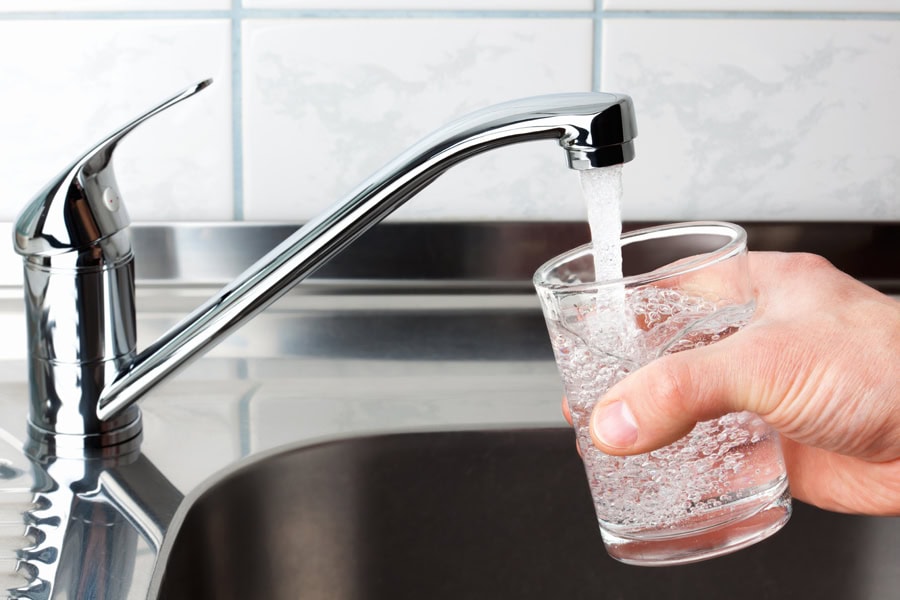
If you’ve ever filled a glass of tap water in Tucson, Arizona, you might’ve paused mid-pour and wondered, “Is Tucson tap water really safe to drink?” With the desert heat, hard water rings on your fixtures, and whispered conversations about PFAS contamination, it’s no wonder local residents—newcomers and long-time residents alike—care deeply about what’s in their water.
Is the tap water safe to drink in Tucson? The short answer is yes; Tucson’s tap water is generally considered safe, and municipal water meets the required (and newly revamped) standards set by the Arizona Department of Environmental Quality (AZDEQ).
However, even with new standards implemented to address PFAS and the reopening of wells, there will still be ‘allowable limits’ for certain contaminants. There are good reasons behind homeowners in Tucson and across Pima County desiring water treatment and filtration systems.
In this blog, Temperature Control will discuss common concerns, water facts, and practical filtration solutions to improve taste, reduce odor, and build confidence in safe drinking water.
Where Tucson’s Water Comes From
Tucson Water supplies drinking water to roughly three-quarters of a million people in the Tucson metro area. Its sources include a blend of:
- Groundwater drawn from local aquifers
- Imported surface water from the Colorado River System
These sources are treated and monitored to comply with federal and state standards under the Safe Drinking Water Act before they ever reach your faucet. The city of Tucson publishes an annual Consumer Confidence Report each June, which details water quality and testing results.
Does Tucson’s Tap Water Meet Safety Standards?
Yes, Tucson Water regularly meets or exceeds all mandatory health and safety standards established by the EPA and the AZDEQ. This means legally, water from your tap is safe to drink, brush your teeth with, shower in, and cook with.
Common Local Water Quality Concerns
Many residents experience common water “issues,” though not necessarily hazardous, that still affect day-to-day quality, such as:
- Hard water that leaves scale on fixtures and in pipes
- A chlorine taste (usually caused by water treatment measures)
- A mineral taste (usually caused by water sources)
- Sediment or cloudiness
- Chemical or odd smell
A more serious concern, and one that is ever-growing as more data and evidence are produced, is PFAS (a large group of nearly 15,000 man-made “forever chemicals”) and other chemical and naturally occurring contaminants.
Detectable Contaminants in Tucson Water Supply
Meeting standards doesn’t mean the water is perfect. Trace levels of various minerals and compounds, such as arsenic, nitrates, chlorination byproducts, and hardness minerals, can show up in testing.
Some data sets, including independent databases such as the Environmental Working Group (EWG), report contaminants above their own health guidelines, even though they are within federal limits.
Arsenic in Tucson Water
For example, the EWG has a health guideline of 0.004 parts per billion (ppb) for arsenic in water, while the legal limit (which is based on balancing health risks, costs, and available treatment technology) allows up to 10 ppb. Their 2024 report of Tucson water revealed 2.04 ppb was present.
While arsenic is naturally occurring, it is toxic and can negatively affect a number of organs and systems, including your immune system, endocrine system, kidneys, liver, and heart. The International Agency for Research on Cancer also labels it as “carcinogenic to humans” with evidence of causing lung, bladder, and skin cancer, and additional studies looking at links between arsenic and kidney, liver, and prostate cancer.
Arsenic cannot be removed by boiling or chlorination, and it is just one example of contaminants in Tucson water.
PFAS in Tucson Water
PFAS are per- and polyfluoroalkyl substances, or man-made chemicals that were created in the 1950s as a way to make products resistant to water, stains, and grease. They are deemed “forever chemicals” because they do not break down in the environment or in the human body.
In fact, they accumulate in the body and are a major potential health risk—the extent of which we have recently begun to uncover. The research we have conducted to date has shown a link between certain PFAS exposure and adverse health issues, such as:
- Altered metabolism and body weight regulation
- Risk of childhood obesity
- The immune system’s reduced ability to fight infections
- Higher risk of certain cancer types
Hard Water Issue in Tucson
Hard water is the term for a high level of dissolved minerals, such as magnesium and calcium, in your water supply. Tucson has very hard water because a large portion of its water supply comes from underground aquifers.
While hard water is completely safe to drink, it is what causes the buildup on the tips of your faucets, the unseen scaling in your pipes that leads to frequent clogs, and the discoloration in your tubs or toilets. It also dries out your hair and skin and makes it harder for soap to suds up, which can affect the quality of your showers, your dishwashing, and your laundry.
Water Filtration: What Works and Why It Helps
Whether you are a lifelong Tucson resident or have just moved to the state and purchased a home in Marana, a water filtration system can make a noticeable difference in taste and quality, and in some cases, reduce the allowable contaminants in your water supply.
Here are some common water filtration and treatment approaches:
Activated Carbon Filters
Reduces chlorine and certain organic chemicals, making it effective at improving taste and odor. Common systems include:
- Point-of-use filters installed on kitchen faucets
- Refrigerator filtered water dispensers
- Countertop units
Reverse Osmosis Systems
Reverse osmosis systems are point-of-use water filters, meaning they are installed at a single tap water source, usually your kitchen faucet. It is one of the more comprehensive water filtration options; it forces water through a membrane that removes many dissolved particles and contaminants, including PFAS and arsenic.
Whole-House Filters (Point of Entry)
Whole-house water filters are installed at the point where the water enters your home. They are well known for reducing sediment, hardness minerals, heavy metals, and chlorine, with some models capable of filtering out chemicals, volatile organic compounds (VOCs) like pesticides and industrial solvents, and PFAS—though they may not do so as finely as a dedicated under-sink reverse osmosis system.
Water Softeners
Water softeners are a type of water treatment systems that target the hardness of your water. The system works by using a process known as ion exchange. Water enters and passes over sodium-coated beads. Magnesium and calcium are attracted to sodium ions and bind to them, leaving your water free of these minerals.
Sip With Confidence: Install a Water Filter System
So, can you drink the water in Tucson straight from an untreated tap? Yes, technically. But… do you really want to?
A water filtration system will provide you with not only better-tasting water but also much safer water. Even if water quality testing reports say the local Tucson water is safe, small levels of contaminants can still legally be present—even though the smallest amounts are shown to be harmful to our long-term health.
Boost your confidence with every glass you pour and enjoy a smart, healthy home upgrade you can be proud to invest in for years to come. Contact Temperature Control for a free consultation to determine which water filtration and treatment system is ideal for your home and drinking water quality goals. Call 520-815-5665 or request service online.