
Can You Drink the Tap Water in Tucson?
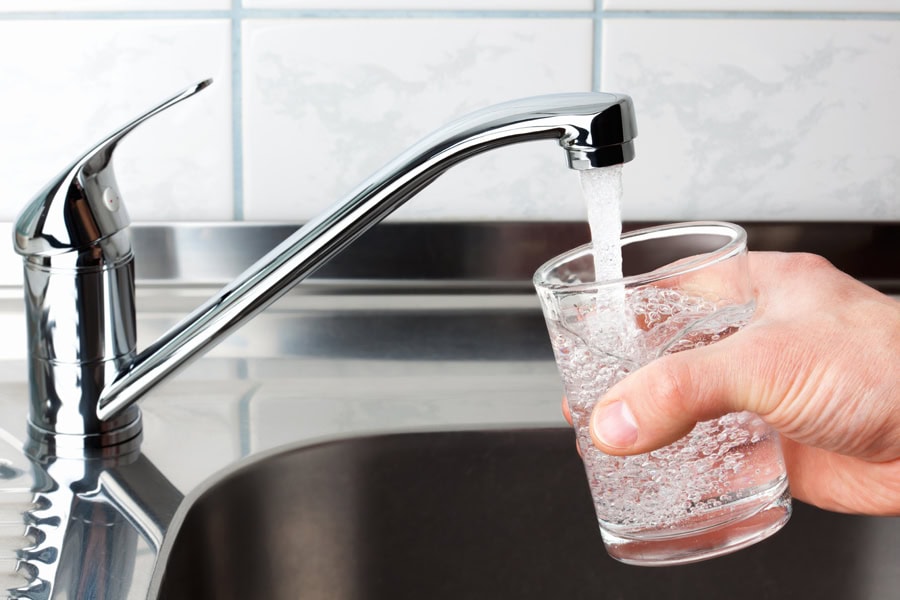
If you've ever filled a glass of tap water in Tucson, Arizona and paused mid-pour to wonder "is this actually safe to drink?", you're in good company. Between the desert heat, the hard-water rings on your fixtures, and the steady drumbeat of news about PFAS "forever chemicals," it's no wonder Tucson residents, newcomers and lifers alike, care a lot about what's coming out of the faucet.
So let's answer it plainly, then dig into what makes Tucson's water genuinely Tucson's, including a south-side contamination story that most "is the water safe" articles skip entirely. Along the way, Temperature Control will cover the real contaminants, how to check your own home's water, and which filtration setups actually fit Tucson's particular mix of problems.
Can you drink the tap water in Tucson?
Yes, you can drink the tap water in Tucson. It's legally safe and meets every federal and state health standard, though hard water, trace arsenic, and airport-area PFAS lead many residents to filter it anyway.
Tucson Water serves roughly three-quarters of a million people, and the utility that delivers your water reports that it meets all the enforceable limits set by the Arizona Department of Environmental Quality and the EPA. Legally, that means it's fine to drink, cook with, brush your teeth with, and shower in.
But "meets the limits" and "nothing in it" are two different sentences. Federal limits are set by balancing health risk against treatment cost, so water can be fully compliant and still carry trace contaminants that some residents would rather not drink long-term. That gap is the whole reason the filtration conversation exists in Tucson.
Where does Tucson's tap water come from?
Tucson's tap water comes from two sources: groundwater pumped from local aquifers, and imported Colorado River water delivered through the Central Arizona Project (CAP). Both are treated and monitored under the Safe Drinking Water Act before they ever reach your faucet.
The blend matters more than it sounds. The share of CAP water versus native groundwater changes over time and by area, and that ratio affects everything from hardness to taste. The city publishes the specifics every June in its annual Consumer Confidence Report, which breaks down testing results for your system.
Does Tucson tap water meet safety standards?
Yes, Tucson Water consistently meets or exceeds the mandatory health and safety standards set by the EPA and ADEQ. Even for PFAS, the utility states that customers continue to receive water meeting all EPA maximum contaminant levels.
How does it keep doing that as new rules tighten? Partly by pulling wells offline. When testing shows a production well exceeding the newer federal PFAS limits, Tucson Water can remove it from service rather than send that water to homes. It's a quietly reassuring fact, and also a reminder that "the system is safe" is the result of active management, not luck.
Why does Tucson have such hard water?
Tucson has very hard water because its groundwater is naturally high in dissolved calcium and magnesium, and that hardness climbs as more Colorado River CAP water is blended in. The city itself confirms the water is hard, and that hard water, while annoying, is safe to drink.
You don't need a lab to notice it. Hard water is what leaves the chalky crust on your showerhead, the spots on your glassware, and the unseen scale inside your pipes and water heater that shortens their life and can lead to frequent clogs and discoloration in tubs and toilets. It also makes soap harder to lather, which is why your skin, hair, dishes, and laundry can all feel like they're fighting you.
What contaminants are actually in Tucson's water?
Meeting standards doesn't mean the water is pure. Tucson's testing turns up trace levels of arsenic, nitrates, chlorination byproducts, and hardness minerals. Each stays within legal limits, but not always within the stricter health guidelines used by independent researchers like the Environmental Working Group (EWG).
Below are the two that Tucson residents ask about most.
Arsenic in Tucson water
Arsenic shows up in Tucson's tap water because it occurs naturally in southern Arizona's groundwater. EWG's testing reported about 2.04 parts per billion (ppb) in Tucson's water. That's well under the federal legal limit of 10 ppb, but far above EWG's own health guideline of 0.004 ppb.
Why the enormous gap? The legal limit balances health risk against treatment cost; the health guideline is purely about risk. And the risk is real: arsenic is toxic to your immune system, kidneys, liver, heart, and endocrine system, and the International Agency for Research on Cancer classifies it as carcinogenic to humans, with links to lung, bladder, and skin cancer. One important catch for Tucson homes: you can't boil or chlorinate arsenic out. It takes the right filter.
PFAS: the "forever chemicals"
PFAS are per- and polyfluoroalkyl substances, a family of nearly 15,000 man-made chemicals invented in the 1950s to make products resist water, grease, and stains. They're called "forever chemicals" because they don't break down in the environment or in your body; instead, they accumulate over time.
That accumulation is why researchers are concerned. Studies have linked certain PFAS exposures to altered metabolism and body-weight regulation, a weakened immune response to infection, and a higher risk of certain cancers. In Tucson, PFAS isn't an abstract worry. It has a specific, local backstory.
What's the story behind PFAS and the Tucson airport?
Tucson's PFAS problem is rooted in decades of industrial contamination on the city's south side, near the airport and Davis-Monthan Air Force Base. It began with a different chemical entirely, and it's the reason Tucson has one of the most closely watched groundwater cleanups in the Southwest.
Here's the short version of a long, hard history. Starting in the 1950s, companies including Hughes Aircraft dumped the industrial solvent TCE near the airport, contaminating groundwater under neighborhoods roughly south of 22nd Street, north of Los Reales Road, east of I-19, and west of Del Moral Boulevard. The pollution earned a federal Superfund designation and more than $130 million in legal settlements by 2006, plus ongoing cancer screenings for affected residents through the El Rio health center.
To clean it up, the Tucson Airport Remediation Project (TARP) plant has been treating that groundwater for years. The EPA credits the broader effort with removing thousands of pounds of TCE from the aquifer. Then came PFAS. In 2021, TARP temporarily shut down amid a PFAS spike that may have been linked to firefighting foam used at the Air National Guard base until 2018. The plant reopened in 2022 with a new PFAS treatment step, but in a telling move, that treated water is now used as reclaimed water (think golf courses), not piped to homes as drinking water.
The cleanup is still very much active. ADEQ has committed $25 million toward improved PFAS treatment at TARP and is building an ion-exchange system to protect the central well field. And in May 2024, the EPA issued an emergency order directing the Air Force and Air National Guard to address PFAS in the TARP area. The takeaway for residents isn't panic. It's context. Tucson's "meets all standards" water is the product of an expensive, ongoing fight, and the south side carries a contamination legacy worth understanding.
How do I check my own home's water in Tucson?
Start with your address, not the citywide average. Your water's makeup depends on which wells and how much CAP water serve your area, and homes built before 1986 can add their own lead from older pipes or solder regardless of what leaves the treatment plant.
Three quick moves give you a real picture:
- Read your Consumer Confidence Report. Tucson Water's annual water-quality report lists what's actually been detected in the system, updated each June.
- Look up your system independently. EWG's Tucson tap-water database entry shows contaminants measured against stricter health guidelines, not just legal limits.
- Test the water at your tap. A certified home test is the only way to capture what your specific plumbing and neighborhood deliver, especially useful for older homes, private wells (which aren't covered by city testing), or anyone on the south side near the historic Superfund area.
This matters more for some households than others. Infants, pregnant residents, older adults, and people with weakened immune systems are generally more sensitive to trace contaminants, so if that's your home, testing is worth doing rather than assuming.
What water filter is best for Tucson's water?
There's no single "best" filter. The right Tucson setup depends on whether you're fighting hardness, taste, arsenic, PFAS, or all four. Because Tucson's water combines extreme hardness with trace arsenic and a real PFAS history, many homes here end up pairing two systems: a point-of-entry softener for the hardness, plus a point-of-use reverse osmosis unit for drinking water.
Here's how the common water filtration and treatment systems stack up against the contaminants Tucson actually deals with:
| System | Hard-water scale | Chlorine taste & odor | Arsenic | PFAS | Installed at |
|---|---|---|---|---|---|
| Activated carbon filter | No | Yes | Limited | Limited | One tap or pitcher |
| Reverse osmosis (RO) | No | Yes | Yes | Yes | One tap (usually kitchen) |
| Whole-house filter | Some | Yes | Some | Some | Where water enters the home |
| Water softener | Yes | No | No | No | Where water enters the home |
Activated carbon filters
Carbon filters are the budget entry point, and they shine at one thing: taste and smell. They reduce chlorine and many organic chemicals, which is why they show up as faucet attachments, fridge dispensers, and countertop units. What they don't reliably handle is arsenic, PFAS, or hardness, so in Tucson they're a comfort upgrade, not a full solution.
Reverse osmosis systems
Reverse osmosis systems are the heavy hitter for Tucson drinking water. Installed at a single tap (usually the kitchen), RO forces water through a fine membrane that removes a wide range of dissolved contaminants, including the two Tucson residents worry about most, arsenic and PFAS. If you only add one system for what you actually drink and cook with, this is usually it.
Whole-house filters (point of entry)
Whole-house filters treat water where it enters your home, so every tap benefits. They're known for cutting sediment, chlorine, heavy metals, and some hardness, and certain models reduce VOCs and PFAS, just not as finely as a dedicated under-sink RO unit. Think of them as broad protection for the whole house, often paired with RO at the kitchen for drinking.
Water softeners
Water softeners exist to solve Tucson's signature problem: hardness. Using ion exchange, water passes over sodium-coated beads that grab the calcium and magnesium and release them, leaving softer water that's kinder to your pipes, appliances, skin, and laundry. A softener won't remove arsenic or PFAS. It's a hardness tool, which is exactly why it's so often combined with RO here.
So, should you filter your Tucson tap water?
Can you drink Tucson tap water straight from an untreated tap? Yes, technically. But after walking through the hard water, the trace arsenic, and the south-side PFAS history, the better question is whether you want to, and for a lot of Tucson homes, the honest answer is "not without help."
A filtration system gives you better-tasting water and a meaningful cut in the contaminants that are legally allowed to linger. Even when the reports say the water is safe, the smallest long-term exposures are the ones worth designing out of your daily glass.
If you'd like a straight answer for your address, Temperature Control offers a free consultation to match the right drinking water and treatment setup to your home. Call 520-815-5665 or request service online.
Frequently asked questions about Tucson tap water
Is Tucson tap water safe to drink in 2026?
Yes, by legal standards, Tucson tap water meets every federal and state health requirement. Many residents still filter it to reduce hardness and trace contaminants like arsenic and PFAS that can remain within legal limits.
Why does Tucson tap water taste or smell off?
The most common culprits are chlorine from disinfection and dissolved minerals from Tucson's hard water. A carbon filter or reverse osmosis system noticeably improves both taste and odor.
Does Tucson have a PFAS problem?
Tucson has documented PFAS contamination in south-side groundwater near the airport and Davis-Monthan, tied to past industrial use and firefighting foam. The water delivered to homes still meets EPA PFAS limits because the utility treats it and pulls affected wells offline.
Do I need a water softener, a filter, or both in Tucson?
It depends on your goals: a softener tackles hard-water scale, while reverse osmosis tackles contaminants like arsenic and PFAS in your drinking water. Because Tucson has both issues, many homes use a softener plus an RO unit together.